


RECENT SEARCHES
Recently Viewed
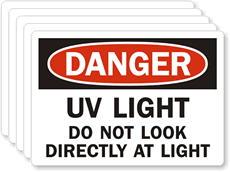
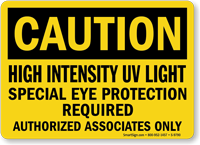
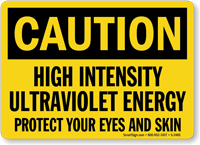
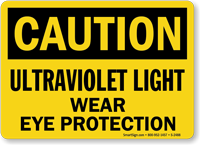
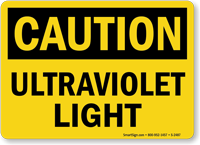
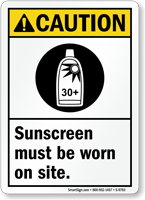
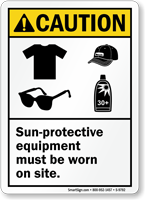
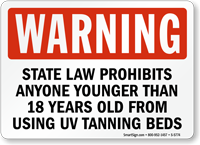
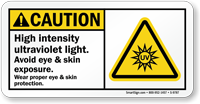
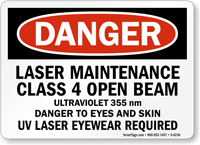
Warning signs are required in any area where occupational exposure to ultraviolet (UV) radiation could exceed the permissible exposure limits (PELs) set by OSHA, such as those posted with a UV radiation hazard ANSI caution sign.
These signs act as a clear hazard communication tool. A high-intensity UV light caution sign can be used for general warning, while a UV light hazard ANSI warning sign can be used to specify the hazard in a particular area.
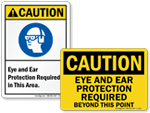
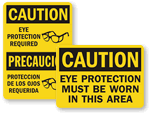
UV safety signs should specify the exact Personal Protective Equipment (PPE) required to enter the area safely. The most critical information is the requirement for OSHA-compliant eye protection. This includes safety glasses or goggles that are specifically rated for UV filtration and meet the ANSI Z87.1 standard.
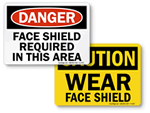
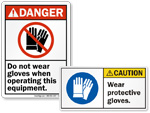
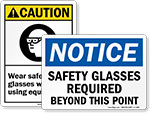
Depending on the radiation's intensity, the sign should also specify the need for skin protection, such as long-sleeved clothing and pants, gloves, or full face shields. Using PPE signs is essential. A sign like "Safety Glasses Required" is a good start, but a more specific "Caution - Wear Eye Protection" sign at the boundary of the UV hazard area is a non-negotiable safety measure.
UV warning signs must be positioned at the "hazard boundary," the specific perimeter or access point where an unprotected person's exposure could exceed the permissible exposure limit (PEL), such as a UV light hazard ANSI warning sign.
These signs should be posted on all doors or entryways leading to rooms with UV germicidal lamps or curing equipment. A UV radiation hazard ANSI caution sign or a warning sign for UV light sources should be placed directly on the access door.
UV warning signs must alert personnel to the specific health risks of exposure. The primary health effects of UV radiation are severe. Signs should warn of acute eye injury, such as photokeratitis (a painful "welder's flash" or sunburn of the cornea), and skin damage, such as burns (erythema).
The signage should also imply long-term risks, including cataracts and skin cancer. By posting clear health hazard signs, you are informing workers of these invisible dangers. A caution x-ray sign, for example, clearly communicates that serious health risks are present and that proper precautions, like those on a radiation warning sign, must be taken.
Yes, when possible, including maximum exposure times on a UV sign is a highly effective administrative control, as recommended by OSHA. For areas with a constant, measurable UV output, the sign can move beyond a simple "Warning" and provide a specific, actionable instruction, such as "MAXIMUM EXPOSURE TIME FOR UNPROTECTED EYES: 10 SECONDS."
This level of detail is crucial for labs and industrial settings. Since these limits are unique to each device and location, this information is typically added to . For example, a customizable UV warning sign allows a facility's safety officer to input the exact PPE required and the specific time limits for that hazard. A general custom warning sign can also be used to detail these specific exposure parameters.
Remind workers to protect their skin and eyes when working with UV light using our UV Safety Signs. Do not look directly at the light source and wear proper PPE.
Call our sales team at (800) 952-1457 and get your quote in minutes!
Mon - Fri 8:00am to 7:00pm EST
Best price guarantee. Fast, free shipping.